
You’ve meticulously crafted the perfect post. The image is stunning, the caption is compelling, and the call-to-action is crystal clear. You hit "publish," expecting a wave of engagement, only to be met with a trickle of likes and a handful of comments. The culprit isn't necessarily your content; it's often the timing. Finding the best time to post on social media is one of the most effective, yet frequently overlooked, strategies for maximizing reach and impact.
It’s a common misconception that in a world dominated by sophisticated algorithms, timing is no longer relevant. The algorithm's job is to show users content they'll find engaging, but it gives initial priority to fresh, recent posts. When you post during peak user activity, you give the algorithm an immediate, larger pool of engaged users to test your content on. This initial burst of likes, comments, and shares signals to the platform that your content is valuable, prompting the algorithm to show it to an even wider audience. Posting at an optimal time creates a snowball effect, turning that initial trickle of engagement into an avalanche.
This guide moves beyond generic advice to provide a comprehensive, platform-by-platform breakdown of peak engagement windows. We will cover everything from the corporate corridors of LinkedIn to the fast-paced trend cycles of TikTok. You'll learn not just when to post, but also how to test and identify the unique "golden hours" for your specific audience and industry. We'll also explore practical scheduling strategies and automation tools to ensure your content consistently reaches the right people at the right time, without chaining you to your desk.
1. Facebook Peak Engagement Windows (1 PM - 3 PM Weekdays)
Determining the best time to post on social media often starts with the largest platform, Facebook. Decades of data from social media management platforms like Sprout Social, Buffer, and HubSpot consistently point to a powerful engagement window: midday on weekdays, specifically between 1 PM and 3 PM.
This timeframe aligns perfectly with widespread daily routines. Users often take lunch breaks or experience a mid-afternoon productivity dip, leading them to scroll through their Facebook feeds. This post-lunch browsing behavior creates a concentrated period of high activity, making it an ideal time to capture attention when users are most receptive.
Why This Window is So Effective
The 1 PM to 3 PM slot isn't just a random peak; it's rooted in user psychology. By this time, the morning rush has subsided, and people seek a mental break. For B2C brands, it’s a chance to catch consumers during a moment of leisure. For B2B companies, it’s an opportunity to connect with professionals checking social media at their desks during a lull.
Key Insight: Posting during this period leverages the natural rhythm of the workday. You're not interrupting a user's focus; you're meeting them where they are during their downtime.
Practical Implementation and Examples
Capitalizing on this window requires more than just scheduling a post. The content itself should align with the audience's midday mindset.
- Retail & E-commerce: A clothing brand could post a "Lunchtime Flash Sale" at 1 PM to drive immediate clicks and purchases.
- B2B Services: A consulting firm might share a quick industry insight or a link to a new blog post at 2 PM, catching professionals before they dive back into their afternoon tasks.
- News & Media: A local news outlet can publish a midday update at 1:30 PM, knowing that's when many residents are catching up on local happenings.
Actionable Tips to Maximize Engagement
To get the most out of this peak window, follow these specific steps:
- Pinpoint Your Sweet Spot: Test posts at 1 PM, 2 PM, and 3 PM on different days to see which time slot generates the most interaction for your specific audience.
- Consult Your Data: Use Facebook Insights to confirm when your followers are most active. Go to
Insights > Posts > When Your Fans Are Online. If your data aligns with this general window, you've found a powerful combination. - Schedule in Advance: Use Facebook's native scheduling tool or a third-party platform to ensure your content goes live consistently during these peak hours without manual effort.
- Monitor Early Performance: The first 30-60 minutes after posting are critical. If a post shows strong initial engagement, consider giving it a small boost to amplify its reach even further.
2. Instagram Golden Hours (11 AM - 1 PM & 7 PM - 9 PM)
Unlike Facebook's single midday peak, the best time to post on social media for Instagram often involves targeting two distinct "golden hours." Extensive research from platforms like Later and various influencer marketing agencies reveals a dual-peak pattern: a late morning window from 11 AM to 1 PM and a powerful evening slot between 7 PM and 9 PM.
This double opportunity aligns with modern mobile usage habits. The late morning slot captures users on their lunch breaks or during a pre-lunch scroll session. The evening window, however, is often even more valuable, catching people as they unwind for the day, relax on the couch, and dedicate more focused time to browsing Reels and Stories.

Why These Windows Are So Effective
Instagram's dual peaks tap into two different user mindsets. The 11 AM - 1 PM window is for quick, engaging updates and "what's for lunch" content. The 7 PM - 9 PM slot is prime time for more immersive content like long-form video, detailed carousels, and interactive Stories, as users have more time to consume and engage deeply.
Key Insight: Success on Instagram isn't just about one post; it's about matching your content type to the audience's mindset during each distinct golden hour.
Practical Implementation and Examples
Leveraging both golden hours allows brands to connect with audiences at different points in their day with tailored content.
- Fashion & Lifestyle: A fashion brand could post a new outfit of the day at 11 AM to inspire lunchtime shoppers and then a more stylistic, in-depth Reel at 8 PM.
- Food & Beverage: A restaurant might post its lunch special at 12 PM and then share a behind-the-scenes video of dinner service or a new cocktail recipe at 7:30 PM.
- Fitness Creators: An influencer could post a quick motivational quote in the morning and a full workout tutorial Reel around 7 PM when followers are planning their next gym session.
Actionable Tips to Maximize Engagement
To get the most out of these two peak windows, a diversified strategy is essential:
- Prioritize the Evening for Reels: The Instagram algorithm often gives video content an extra push. Schedule your most important Reels to go live during the 7 PM - 9 PM window to maximize potential reach.
- Use Stories for Both Windows: Post interactive Stories (polls, quizzes, Q&As) frequently during both peak periods to keep your brand top-of-mind and boost engagement signals.
- Check Your Own Analytics: Use Instagram Insights via
Professional Dashboard > Account Insights > Total Followersand scroll down to "Most Active Times." Cross-reference your specific data with these general golden hours. - Engage Immediately: The first hour after posting is critical for the algorithm. Be prepared to respond to comments and DMs right after your content goes live in these peak windows to encourage more interaction.
3. Twitter/X Optimal Posting (8 AM - 10 AM & 5 PM - 6 PM Weekdays)
Mastering the best time to post on social media on X (formerly Twitter) requires understanding its fast-paced, real-time nature. Unlike other platforms, content has a very short lifespan. Data from Hootsuite and various social media agencies highlight two distinct peak windows: the morning commute from 8 AM to 10 AM and the end-of-day wind-down between 5 PM and 6 PM.
These timeframes capture users during key transitional moments of their day. The morning slot catches professionals scrolling for news and industry updates as they start their workday, while the evening period connects with them as they browse before, during, or after their commute home. Timing is especially critical on X because recency heavily influences visibility in the feed.
Why This Window is So Effective
The dual-peak structure of X engagement is tied directly to the platform's role as a source for breaking news and live conversation. The 8 AM to 10 AM window is prime for setting the day's narrative, while the 5 PM to 6 PM slot capitalizes on end-of-workday reflection and discussion.
Key Insight: On X, you're not just posting content; you're joining an ongoing, high-velocity conversation. Posting during these peak times ensures your voice is heard when the most people are actively listening and participating.
Practical Implementation and Examples
Content must be timely and concise to succeed in these windows. The goal is to be part of the immediate discourse.
- News & Media: A media outlet could tweet a link to their top morning story at 8:30 AM, catching readers looking for daily headlines. Studies have shown these outlets can get significantly more retweets on morning posts.
- Tech Companies: A B2B tech firm can announce a new product feature at 9 AM, targeting industry professionals just as they're settling in at their desks.
- Business Leaders: An executive could share a key industry insight or ask a thought-provoking question at 5:30 PM, sparking conversation among peers wrapping up their day.
Actionable Tips to Maximize Engagement
To leverage the high-speed nature of X during these peak hours, follow these specific strategies:
- Post Multiple Times: Due to the short lifespan of a tweet, it's essential to post several times daily. Use these peak windows for your most important content.
- Engage with Trends: Monitor trending topics within your niche during these hours. Joining a relevant conversation can dramatically increase your visibility.
- Utilize Threads: If you have a more detailed message, use a thread to tell a story. Schedule the first tweet of the thread to go live at the start of a peak window (e.g., 8 AM or 5 PM).
- Check Your Analytics: Use X Analytics to see when your followers are most engaged. If your specific audience data shows a different peak, prioritize that while still testing these general commute-time windows.
4. LinkedIn Professional Peak (Tuesday-Thursday, 8 AM - 10 AM & 12 PM - 1 PM)
Understanding the best time to post on social media for a professional audience means mastering LinkedIn's unique rhythm. Unlike leisure-focused platforms, LinkedIn activity is intrinsically tied to the workweek, with data from LinkedIn's own research and B2B marketing agencies identifying two key engagement slots: mid-week mornings (8 AM - 10 AM) and lunchtime (12 PM - 1 PM) on Tuesdays, Wednesdays, and Thursdays.
These windows align with professional habits. The 8 AM to 10 AM slot captures users as they start their day, catching up on industry news and professional developments before diving into their core tasks. The lunchtime period from 12 PM to 1 PM represents a second peak, as professionals take a break and browse their feeds, making it another prime opportunity for visibility.
Why This Window is So Effective
The effectiveness of these mid-week, work-hour slots is rooted in user intent. Professionals use LinkedIn to learn, network, and stay current in their field. Mondays are often consumed by planning and catching up from the weekend, while Fridays see attention shift towards wrapping up tasks. This makes Tuesday through Thursday the sweet spot for focused professional engagement.
Key Insight: On LinkedIn, your content isn't a distraction from work; it's part of the professional workday. Posting during these peak times ensures you are reaching your audience when they are in a career-oriented mindset.
Practical Implementation and Examples
Timing your content for these windows can dramatically increase its impact. The key is to match your content to the professional context of the platform.
- Recruitment: An HR professional posting a new job opening at 9 AM on a Wednesday can expect significantly higher application rates from active and passive candidates.
- B2B Technology: A software company could announce a new feature or share a case study at 12:30 PM on a Tuesday, catching decision-makers during their lunch break.
- Thought Leadership: An industry executive sharing insights via a long-form article at 8:30 AM on a Thursday can capture a wider audience of professionals seeking morning inspiration.
Actionable Tips to Maximize Engagement
To fully leverage LinkedIn's professional peak, a targeted approach is necessary:
- Focus on Mid-Week Posts: Prioritize your most important content for Tuesday, Wednesday, and Thursday. Use Mondays for planning and Fridays for lighter, community-focused content if needed.
- Test Morning vs. Lunch: Experiment by posting similar content at 9 AM and 12 PM on different days to determine which slot resonates best with your specific followers.
- Use LinkedIn Analytics: Validate these general times with your own data. In your Page Analytics, check the "Followers" tab to see the days and times your specific audience is most active.
- Avoid Off-Hours: Engagement drops sharply after 5 PM and on weekends. Unless your industry has a unique schedule, avoid posting during these times to ensure your content doesn't get lost.
5. TikTok Algorithm-Driven Timing (6 PM - 10 PM Peak, Post Anytime Strategy)
Understanding the best time to post on social media for TikTok requires a different approach than other platforms. While a peak user traffic window exists between 6 PM and 10 PM, TikTok's powerful For You Page (FYP) algorithm prioritizes content quality and engagement signals over strict chronological posting.
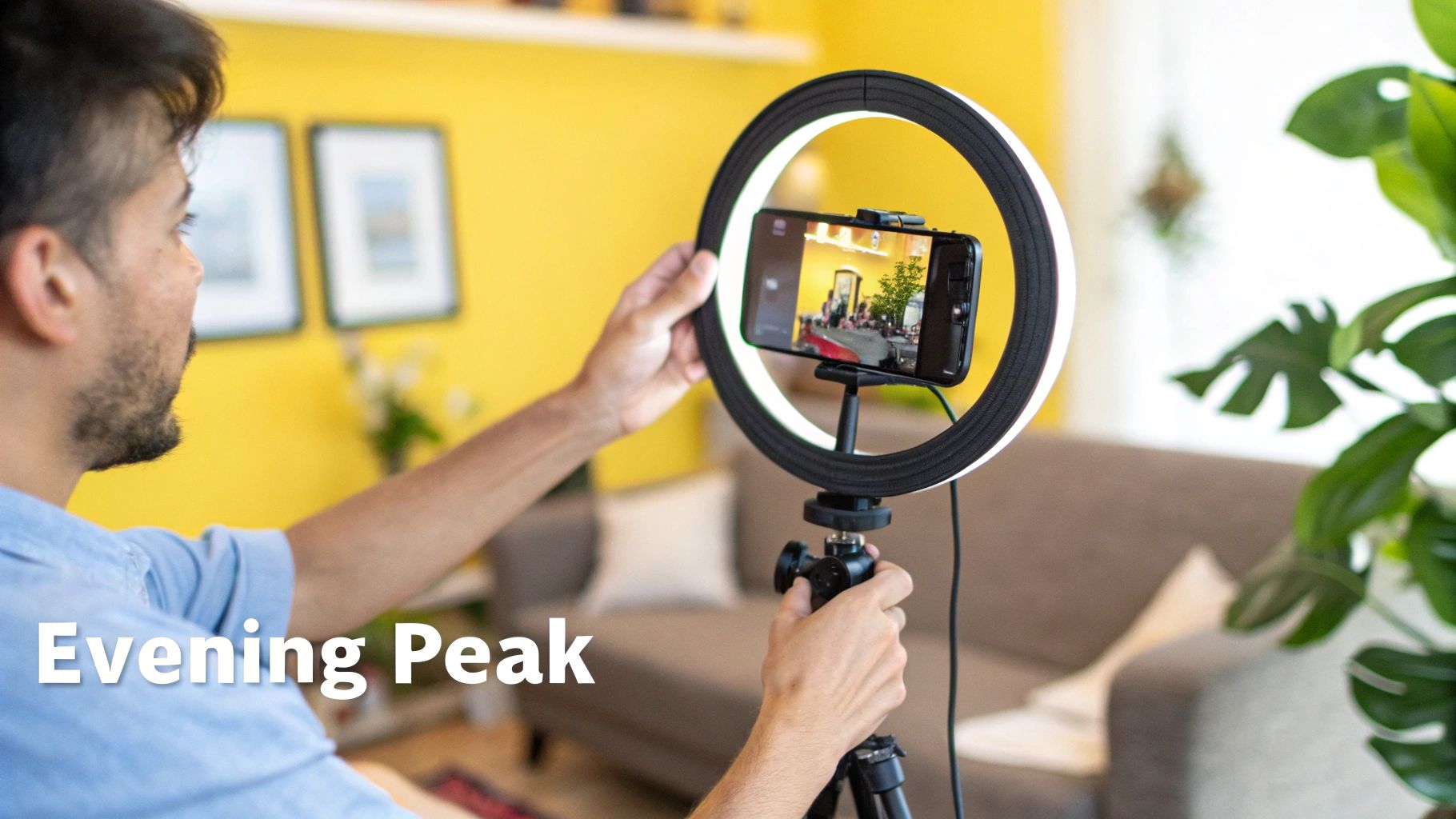
Unlike a traditional feed, the FYP can surface older videos that are gaining traction, meaning a high-quality post can go viral days or even weeks after it was published. However, posting during peak hours gives your content an initial boost by appearing in your followers' feeds, which can kickstart the engagement needed for the algorithm to take notice.
Why This Window is So Effective
The 6 PM to 10 PM slot captures users during their prime downtime after school or work. This evening period is when they are most likely to be relaxing, scrolling, and engaging with entertainment content. The algorithm's flexibility means that while this window is ideal for an initial push, the true measure of success is the content's ability to hold a viewer's attention.
Key Insight: On TikTok, what you post is more critical than when you post. A highly engaging video posted at an "off-peak" time will almost always outperform a mediocre video posted during peak hours.
Practical Implementation and Examples
Success on TikTok hinges on creating content that resonates, regardless of the timestamp. The timing strategy is about giving great content its best first chance.
- Entertainment & Dance: A creator posting a new dance challenge at 7 PM leverages high user activity to generate immediate likes, comments, and shares, signaling to the algorithm that the content is valuable.
- Educational Content: A creator sharing a quick "how-to" video might find it gets consistent views regardless of posting time because its value is tied to the information, not the moment.
- Brand Campaigns: A brand could post 3-5 times daily at varied times to test different audience segments and find which content types perform best, letting the algorithm do the heavy lifting of distribution.
Actionable Tips to Maximize Engagement
To master TikTok's unique rhythm, focus on the algorithm first and the clock second.
- Prioritize the First 3 Seconds: Your video's hook is more important than its post time. If you can't capture attention immediately, the algorithm won't push your content, no matter when you post it.
- Use the 6 PM to 10 PM Window for Follower Feeds: Schedule your most important content during this peak time to maximize initial visibility with your existing audience.
- Post Consistently and Frequently: Aim for 3-5 posts per day at different times. This strategy provides more data points for the algorithm to learn what your audience responds to and increases your chances of a video taking off.
- Leverage Trending Sounds and Challenges: Participate in trends within the first few hours of their emergence. This timeliness can give your content an algorithmic advantage that is more powerful than any specific posting window.
6. YouTube Optimal Publishing (Weekday Evenings 5 PM - 7 PM & Saturday Morning 9 AM - 11 AM)
Unlike platforms driven by chronological feeds, finding the best time to post on social media for YouTube involves playing a longer game. While YouTube's algorithm prioritizes watch time and engagement over pure recency, strategic publishing windows like weekday evenings (5 PM - 7 PM) and Saturday mornings (9 AM - 11 AM) are crucial for building initial momentum.
These timeframes are designed to capture audiences as they wind down or begin their leisure time. The early evening slot aligns with people finishing their workday or school, while the Saturday morning window catches viewers looking for content to start their weekend. Publishing during these periods gives your video a critical head start on accumulating views and engagement, which signals to the algorithm that it's worth promoting to a wider audience.
Why This Window is So Effective
The initial 24-48 hours of a video's life are pivotal. The 5 PM to 7 PM weekday slot maximizes exposure to a working audience ready for entertainment or education after a long day. Similarly, the 9 AM to 11 AM Saturday window targets a relaxed audience, including students and families, who are actively seeking content to watch. A strong initial performance in these windows can trigger a snowball effect, pushing your content into recommended feeds.
Key Insight: YouTube timing is less about immediate visibility and more about fueling the algorithm. You're giving your video its best chance to gather the early engagement data it needs to succeed over the long term.
Practical Implementation and Examples
The content of your video should align with the viewing habits of your audience during these peak times.
- Gaming Channels: A creator could upload a new "Let's Play" video at 6 PM on a Friday, catching the massive weekend gaming audience as they log on.
- Educational Channels: An expert might publish a detailed tutorial at 10 AM on Saturday, targeting students and professionals who use the weekend for self-improvement.
- Vlog Creators: A travel vlogger can maximize watch time by releasing their latest adventure at 7 PM on a weekday, offering viewers an engaging escape.
Actionable Tips to Maximize Engagement
To leverage these YouTube publishing windows effectively, follow these specific steps:
- Prioritize the First 48 Hours: Your primary goal is to drive as much engagement (likes, comments, shares, watch time) as possible within the first two days. Promote your new video across all other social channels immediately after it goes live.
- Consult Your Data: Use YouTube Analytics to see when your audience is most active. Navigate to
Analytics > Audienceand review the "When your viewers are on YouTube" report to validate or adjust these general timeframes. - Optimize Beyond Timing: A compelling thumbnail and title are often more important than the exact publishing time. Ensure these elements are click-worthy to capitalize on any algorithmic exposure you receive. For more strategies, you can explore comprehensive guides on content creation on stacksite.io.
- Monitor View Velocity: Pay close attention to how quickly your video accumulates views in the first few hours. If a particular time slot consistently results in a higher view velocity, make that your go-to publishing time.
7. Pinterest Peak Discovery (3 PM - 6 PM Weekdays & 8 PM - 11 PM)
Understanding the best time to post on social media for Pinterest requires a different mindset. Unlike platforms driven by real-time feeds, Pinterest thrives on discovery and long-term value, with two key engagement windows: the post-work browsing session from 3 PM to 6 PM and the late-evening inspiration hunt between 8 PM and 11 PM.
These timeframes capture users when they are actively planning, dreaming, and searching for ideas. The afternoon window often catches people winding down their workday, while the evening slot is prime time for hobbyists, planners, and shoppers to curate boards for future projects, from home decor to recipes and fashion.

Why This Window is So Effective
The dual-peak nature of Pinterest engagement is tied directly to its use case as a visual discovery engine. Users turn to Pinterest with intent, whether it's planning a meal, designing a room, or finding a new outfit. The 3 PM to 6 PM window aligns with this planning mindset as the day concludes, and the 8 PM to 11 PM slot is a relaxed, lean-back period ideal for deep browsing and saving content for later.
Key Insight: On Pinterest, timing is less about instant viral engagement and more about planting evergreen seeds. A pin posted during a peak window has a higher chance of being discovered and repinned, extending its lifespan from hours to months.
Practical Implementation and Examples
Success on Pinterest hinges on consistency within these windows, leveraging the platform's search-oriented nature. The goal is to be present when users are most actively seeking inspiration.
- Home Decor Brands: Pinning a new collection of living room ideas at 8:30 PM can capture homeowners planning a weekend redecorating project.
- Food Bloggers: A food blogger can schedule pins for quick weeknight dinner recipes to go live around 4 PM, just as users are deciding what to cook.
- Fashion Retailers: A boutique could post "Weekend Outfit Inspiration" pins around 9 PM on a Thursday, catching users as they plan their social outings.
Actionable Tips to Maximize Engagement
To get the most out of Pinterest's unique discovery cycle, focus on volume and timing:
- Embrace High-Volume Pinning: Aim to pin 5-30 times daily, spreading them across both the 3-6 PM and 8-11 PM windows to maximize exposure.
- Optimize for Discovery: Create vertical pins (1000x1500px) and write keyword-rich descriptions. Think like a search engine, not just a social feed.
- Schedule for Consistency: Use a scheduling tool like Tailwind to batch-create and schedule pins weeks in advance, ensuring you never miss a peak window.
- Engage with the Community: Actively repin and share relevant content from other creators during peak hours to boost your profile's visibility and engagement signals.
8. Snapchat Immediate Posting (Real-Time Content, Anytime Strategy)
While most platforms reward finding the best time to post on social media, Snapchat flips the script. Its core value lies in real-time, ephemeral content that disappears in 24 hours. This structure prioritizes authenticity and immediacy over perfectly timed, algorithmically-favored posts, making the best time to post right when something interesting happens.
The platform is designed for live, unfiltered moments rather than polished, scheduled content. Users expect to see what’s happening now, not what was planned last week. This means brands and creators find greater success by embracing a spontaneous, "always-on" approach, sharing authentic moments as they occur, regardless of the time of day.
Why This Window is So Effective
The "anytime" strategy for Snapchat is effective because it aligns directly with user expectations for the platform. It's a space for raw, behind-the-scenes content that feels genuine. Trying to optimize for a specific time slot can make content feel staged or overly corporate, which clashes with the platform's culture.
Key Insight: On Snapchat, relevance is tied to immediacy, not the clock. Posting in the moment leverages the platform's core strength: sharing authentic, real-time experiences.
Practical Implementation and Examples
Capitalizing on Snapchat's real-time nature means being ready to capture and share content spontaneously. The focus shifts from pre-production to being present and reactive.
- Live Events: A band at a concert can post short video clips of their performance and backstage moments as they happen, giving followers an exclusive, live feel.
- Brand Culture: A tech startup can share a quick Story of a team brainstorming session or an office celebration, humanizing the brand in real-time.
- Breaking News: An entertainment news account can post immediate reactions and clips from a red-carpet event, capturing the excitement of the moment.
Actionable Tips to Maximize Engagement
To get the most out of Snapchat’s immediate format, adapt your strategy with these steps:
- Embrace Spontaneity: Prioritize sharing moments as they unfold. Ditch the rigid content calendar in favor of being "on" during key events or daily activities.
- Post Multiple Stories: Instead of one big post, build a narrative throughout the day with several short Snaps. This keeps your audience engaged and coming back for more.
- Focus on Authenticity: Don't overthink production value. A slightly shaky, unfiltered video often performs better than a polished ad because it feels more genuine and trustworthy.
- Engage with Responses: Since content is immediate, so should be your engagement. Respond quickly to user messages and Snaps to foster a sense of real-time conversation.
9. Reddit Community-Specific Timing (Early Morning 7 AM - 9 AM & Evening 6 PM - 8 PM)
Finding the best time to post on social media becomes highly community-dependent when navigating Reddit. Unlike monolithic platforms, Reddit is a collection of niche communities (subreddits), but broad data reveals two significant engagement peaks: early mornings (7 AM - 9 AM) and evenings (6 PM - 8 PM).
These windows capture users during common downtime. The morning slot catches people browsing before work or school starts, while the evening period aligns with post-work relaxation and leisure scrolling. For Reddit, timing is crucial because its upvote-driven algorithm heavily favors posts that gain immediate traction, making early engagement a key factor in visibility.
Why This Window is So Effective
The 7 AM to 9 AM and 6 PM to 8 PM timeframes are powerful because they align with commuter and after-hours internet usage. Users on r/AskReddit might pose a question during their morning coffee, while someone browsing r/lifeprotips on their commute home is more receptive to new ideas. Success on Reddit depends less on a global peak and more on being present when a specific subreddit's members are most active and ready to interact.
Key Insight: On Reddit, your first hour is everything. Posting during these general peak times gives your content the best chance to get the initial upvotes needed to trend within a community.
Practical Implementation and Examples
Adapting your content to the unique culture of a subreddit is as important as the timing itself. The goal is to provide value, not just to promote.
- Community Engagement: A developer could post a helpful code snippet to a programming subreddit at 8 AM, catching peers before they start their workday.
- Expert Q&A: A brand expert could host an "Ask Me Anything" (AMA) in a relevant subreddit scheduled for 7 PM, engaging directly with the community during peak leisure hours.
- Viral Content: A user sharing a fascinating discovery on r/todayilearned during the evening window can capture a large, relaxed audience, increasing the likelihood of upvotes.
Actionable Tips to Maximize Engagement
To effectively leverage Reddit's unique ecosystem, a strategic approach is necessary:
- Research Subreddit Activity: Before posting, lurk in your target subreddit. Check the timestamps on top-performing posts to identify community-specific peak hours.
- Engage in the First Hour: Once you post, stay active. Respond to the first few comments immediately to show engagement and encourage the Reddit algorithm to boost your post's visibility.
- Follow the Rules: Every subreddit has its own set of rules. Read and follow them meticulously to avoid having your post removed or being banned. Authenticity trumps promotion.
- Prioritize Contribution: Frame your posts as contributions to the community rather than self-promotion. Share valuable information, ask insightful questions, or offer genuine entertainment.
10. Timezone-Adjusted Global Posting (Multiple Post Times for International Audiences)
For businesses and creators with a worldwide reach, the best time to post on social media isn't a single time slot; it's a series of them. A post at 2 PM EST is ideal for a New York audience but completely misses peak engagement in London (7 PM) or Tokyo (3 AM). Timezone-adjusted posting involves scheduling multiple posts throughout the day to align with the local peak hours of your key international audience segments.
This strategy acknowledges that a "one-time-fits-all" approach fails a global audience. Instead of forcing your entire follower base into one window, you deliver content when each segment is most likely to be online and receptive. This method is essential for global brands, international news outlets, and creators with diverse followings to maximize visibility and engagement across continents.
Why This Window is So Effective
A timezone-adjusted strategy is rooted in audience-centric marketing. It demonstrates an understanding of and respect for your followers' daily routines, no matter where they live. By meeting them in their local "prime time," you drastically increase the chances of your content being seen, liked, shared, and acted upon. This prevents your posts from being buried in the feed before your international followers even wake up.
Key Insight: Global engagement isn't about finding a single 'perfect' time. It's about creating a 'perfect' time for each of your major audience locations, ensuring no segment is ignored.
Practical Implementation and Examples
Successfully implementing this requires a shift from single-post thinking to a 24-hour content cycle. The goal is to create a consistent presence in each key market.
- Global Tech Companies: A software-as-a-service (SaaS) company might schedule a product update to post at 9 AM GMT for its European users, 12 PM EST for North America, and 6 PM SGT for its growing Asian market.
- International Fashion Brands: A retailer could launch a new collection by posting three times: once for the morning scroll in Europe, once for the lunchtime break in the Americas, and once for the evening wind-down in Australia.
- YouTube Creators: A popular vlogger could announce a new video at 8 PM local time in their top three audience countries to build hype and drive initial views from each region.
Actionable Tips to Maximize Engagement
To get the most out of a global posting strategy, follow these specific steps:
- Analyze Your Audience Location: Use the built-in analytics on Instagram, Facebook, or YouTube to identify your top 3-5 countries or cities by follower count.
- Identify Regional Peak Times: Research or test the optimal engagement windows for each key geographic market (e.g., late morning in the UK, midday in the US, early evening in Southeast Asia).
- Use a Scheduling Tool: Platforms like Buffer, Hootsuite, or Later are indispensable for this. They allow you to queue the same or regionally-adapted content to go live at specific times in different timezones. Learn more about effective auto-posting strategies for global audiences on stacksite.io.
- Adapt Content When Necessary: While you can post the same content multiple times, consider creating regionally relevant variations. This could be as simple as changing the currency in a product post or referencing a local holiday.
Best Times to Post — Platform Comparison
| Platform / Timing | Implementation complexity | Resource requirements | Expected outcomes | Ideal use cases | Key advantages |
|---|---|---|---|---|---|
| Facebook Peak Engagement Windows (1 PM - 3 PM Weekdays) | Medium — schedule & A/B test within window | Moderate — regular posts, analytics | Higher midday reach and CTR; quick early engagement | B2B, news outlets, retail lunch promotions | Consistent broad reach; algorithm boost from early interactions |
| Instagram Golden Hours (11 AM - 1 PM & 7 PM - 9 PM) | Medium — manage dual daily peaks | High — visual assets, frequent Stories/Reels | Strong feed, Story and Reels engagement during peaks | Lifestyle, fashion, beauty, creators | Two daily opportunities; high visual engagement and leisure-time use |
| Twitter/X Optimal Posting (8 AM - 10 AM & 5 PM - 6 PM) | High — rapid posting and realtime monitoring | High — constant monitoring, multiple posts | High immediate visibility but short lifespan (1–2 hrs) | News orgs, tech companies, thought leaders | Time-sensitive reach; effective for trending conversations |
| LinkedIn Professional Peak (Tue-Thu, 8 AM - 10 AM & 12 PM - 1 PM) | Low–Medium — focused midweek schedule | Moderate — long-form content and analytics | High B2B engagement and thought-leadership traction | B2B companies, recruiters, consultants | Professional audience in business mindset; consistent week-to-week results |
| TikTok Algorithm-Driven Timing (6 PM - 10 PM Peak; post anytime) | Medium — content-first strategy, test timing | High — frequent high-quality video production | Variable; strong algorithmic resurfacing and evening boost | Entertainment, creators, Gen Z-focused brands | Algorithm can surface evergreen content; less reliant on exact timing |
| YouTube Optimal Publishing (Weekday Evenings 5 PM - 7 PM & Sat 9 AM - 11 AM) | High — coordinated publishing and promotion | Very high — video production, thumbnails, SEO | Strong watch-time-driven growth; early engagement vital | Vloggers, educators, gamers, reviewers | Long content lifespan; algorithm rewards watch time and early momentum |
| Pinterest Peak Discovery (3 PM - 6 PM & 8 PM - 11 PM) | Medium — consistent pinning and keywording | Moderate — high-quality vertical images, scheduling | Long-term traffic and steady referral growth | E‑commerce, home decor, food, DIY | Very long content lifespan; strong discovery and referral potential |
| Snapchat Immediate Posting (Real-Time, Anytime) | Low — post live moments as they occur | Moderate — frequent authentic content creation | Immediate ephemeral engagement; low retention | Live events, Gen Z brands, behind-the-scenes content | Authentic, real-time engagement and FOMO-driven interaction |
| Reddit Community-Specific Timing (7 AM - 9 AM & 6 PM - 8 PM) | High — subreddit research and community norms | Moderate — research, active comment moderation | High visibility if early engagement succeeds; variable by subreddit | Niche communities, AMAs, authentic brand engagement | Deep, genuine community engagement; less mainstream saturation |
| Timezone-Adjusted Global Posting (Multiple Post Times) | Very high — complex scheduling and coordination | High — scheduling tools, localization, more content | Maximized global reach and staggered regional engagement | Global brands, multinational media, international creators | Captures multiple regional peaks; increases total global engagement |
Putting It All Together: How to Find and Automate Your Perfect Posting Schedule
Navigating the complex world of social media algorithms can feel like trying to hit a moving target in the dark. Throughout this guide, we've illuminated the peak engagement windows for every major platform, from the professional corridors of LinkedIn to the vibrant, fast-paced feeds of TikTok. We've dissected the data-backed “golden hours” for Instagram and the prime-time slots for Facebook, giving you a powerful strategic starting point.
But the most crucial takeaway isn't a specific time slot, like 1 PM on a Wednesday. The real lesson is that the universally “best time to post on social media” is a myth. The perfect time is deeply personal to your brand, your industry, and most importantly, your unique audience. The platform-specific times we've covered are your launchpad, not your final destination.
From General Data to Your Specific Strategy
The journey from generic advice to a tailored, high-performance posting schedule involves a simple but powerful feedback loop: Post, Analyze, Refine, and Automate. This is where you transform data into decisions.
- Start with the Baseline: Use the recommended times in this article as your initial testing ground. For an e-commerce brand, this might mean scheduling Instagram posts around 11 AM and 8 PM, and targeting Pinterest in the late evening.
- Dive into Your Analytics: After a few weeks, your own data will start telling a story. Look at your platform analytics (Instagram Insights, Facebook Business Suite, TikTok Analytics, etc.). Are your posts getting the most engagement outside the "recommended" windows? Your audience might be night owls or early risers.
- Identify Your True Peak Hours: Your data is the ultimate source of truth. Pinpoint the days and hours that consistently deliver the highest reach, likes, comments, and shares. This is your best time to post, validated by your followers.
Key Insight: Treat published best-practice times as a hypothesis. Your analytics are the experiment that proves or disproves it for your specific account.
The Power of Intelligent Automation and Consistency
Once you've identified your optimal posting windows, the challenge shifts from discovery to execution. Manually posting at these precise times is impractical, especially if you're a solo creator or a small business owner. This is where automation becomes your most valuable ally, ensuring you never miss an opportunity to connect with your audience when they're most active.
Implementing a smart automation strategy isn't just about saving time; it's about building momentum. Consistency is a key signal to social media algorithms. When you consistently post high-quality content during peak engagement hours, you signal to the platform that you are a reliable and valuable creator, which can lead to increased visibility and organic reach.
Consider creating a content calendar that maps out your posts for the week or month ahead. Then, use a scheduling tool to load this content and set it to publish automatically during the peak times you’ve discovered. This frees you from the tyranny of the clock and allows you to focus on what truly matters: creating great content and engaging with your community in real-time. By systematizing your posting schedule, you build a reliable and effective social media engine that works for you, even when you're not working.
This methodical approach transforms social media management from a reactive, often stressful task into a proactive, strategic process. You're no longer guessing; you're operating based on data-driven insights, ensuring every piece of content has the maximum possible chance to succeed. This is how you win the long game of social media growth.
Ready to stop guessing and start scheduling with data-driven precision? Stack Site, Inc. provides the tools you need to analyze your audience, automate your posting schedule, and manage all your social platforms from one intuitive dashboard. Turn these insights into action and build a powerful, consistent social media presence today at Stack Site, Inc..